Diamond drilling vs RC drilling: how each method works, what each sample tells your geologists, and how to combine the two for the best value from every metre.
Diamond core drilling and reverse circulation (RC) drilling are the two workhorses of hard-rock mineral exploration. Both put holes into the ground and bring back samples, but they answer different questions at different costs. Choosing well, and knowing when to use both, is one of the most important decisions in any exploration programme.
This guide explains how each method works, what the samples tell you, and how to decide which one your programme needs.
How diamond core drilling works
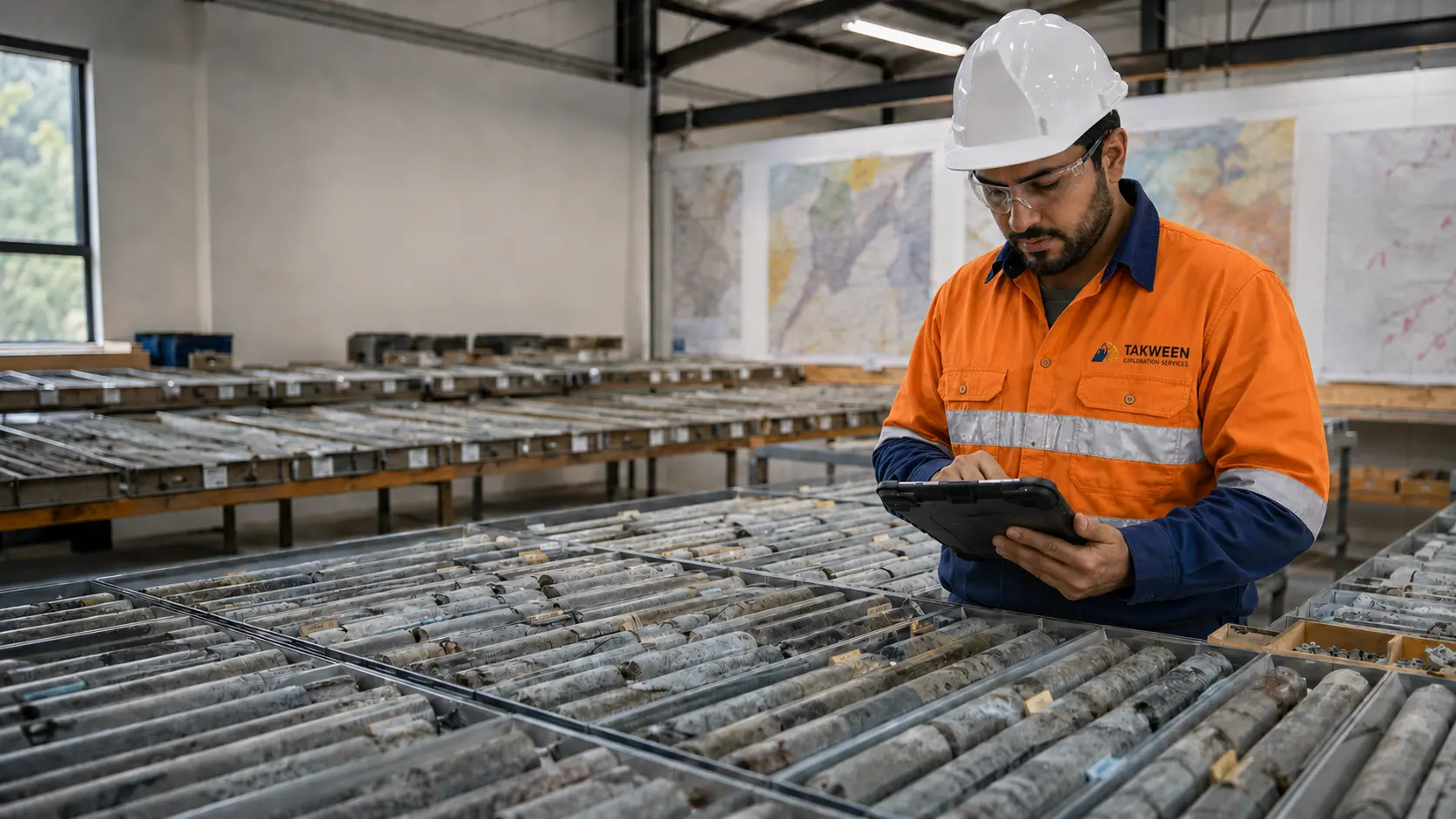
A diamond core rig turns a hollow bit set with industrial diamonds. The bit cuts a continuous cylinder of rock, the core, which slides into an inner tube behind the bit. With wireline equipment the inner tube is winched to the surface through the rods at the end of each run, so the rods can stay in the hole. The core is laid out in trays in the order it came out of the ground, marked with its depth and photographed.
Core comes in standard sizes. PQ is the largest of the common sizes, HQ is a popular choice for exploration, and NQ is smaller and suits deeper holes. Your geologists choose the size that balances sample volume, depth and cost.
How RC drilling works
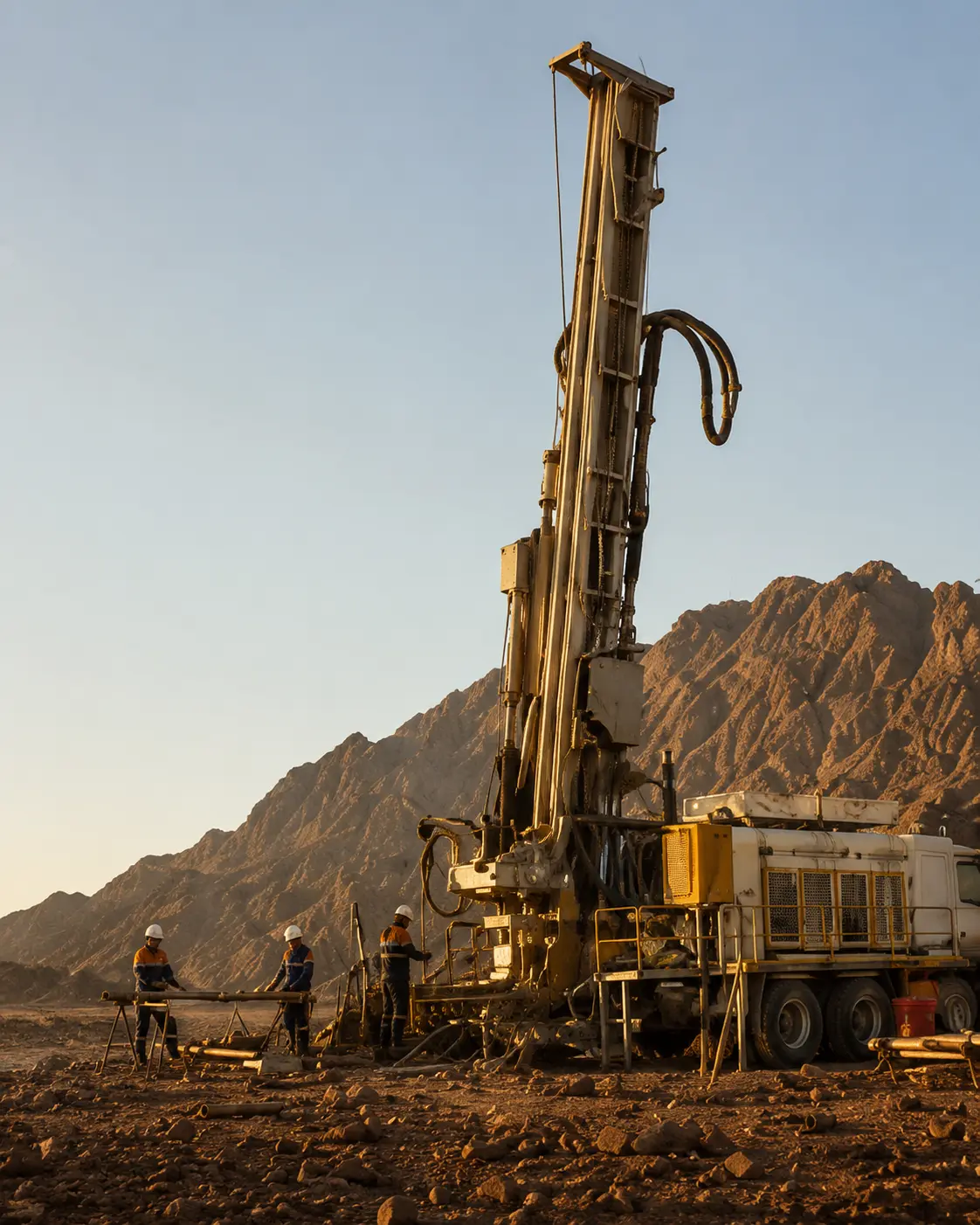
An RC rig uses dual-walled rods and a pneumatic hammer. Compressed air drives the hammer, which breaks the rock at the bottom of the hole, and the air carries the rock chips up through the inner tube to the surface. There the chips pass through a cyclone and a splitter, and one sample is collected for each drilled interval, often one metre.
Because the sample travels inside the rods rather than up the outside of the hole, contamination from the walls is kept low. Good RC drilling depends on enough air, a well-maintained splitter and crews who keep the sample clean.
What each sample tells you
Diamond core
Core shows the rock exactly as it sits in the ground. Geologists can see contacts between rock types, veins, alteration and structure, and with oriented core they can measure the direction of faults and veins. Core also supports geotechnical logging, density measurements and metallurgical tests. That is why core is the reference sample for defining a resource.
RC chips
RC chips are a mix of broken rock from each interval. They give reliable assays and let geologists log rock type, alteration and mineralisation interval by interval, but they cannot show structure or orientation. When sample recovery and splitting are well controlled, RC assays are representative and cost effective.
Speed and cost
RC drilling is usually faster and cheaper per metre than diamond coring, which makes it the natural choice for testing many targets or covering a wide area quickly. Diamond drilling is slower and costs more per metre, but each metre carries far more information.
The real cost depends on depth, ground conditions, access, water, fuel and camp logistics, so compare quotes on the same basis. The better measure is the cost of each metre of usable information, not the headline rate.
Ground conditions and depth
RC drilling can struggle below the water table. Wet samples are harder to split cleanly and the risk of contamination and poor recovery rises, so deeper RC holes need enough air capacity and careful sample handling. The depth an RC rig can reach depends on the rig, the compressor and the ground.
Diamond drilling copes with hard rock and great depths. Company-owned diamond rigs at Takween drill to 1,500 m. Broken or clay-rich ground needs slower drilling and the right drilling fluids to protect core recovery, and experienced drillers make the difference here.
When to choose RC
- First-pass testing of geochemical and geophysical targets
- Step-out and infill drilling around known mineralisation
- Programmes that need broad coverage at a lower cost per metre
- Grade control drilling ahead of mining
When to choose diamond core
- Testing targets at depth, beyond the practical reach of RC
- Holes where structure, veining or rock contacts must be measured
- Resource definition and geotechnical or metallurgical work
- Checking and calibrating earlier RC results
Using both: RC pre-collars and diamond tails
Many programmes combine the two methods in the same hole. An RC pre-collar drills quickly through cover and barren rock, then a diamond tail cores the target zone. You get core where it matters and RC speed everywhere else, which saves time and money without losing information.
Across a project, a common sequence is RC for first-pass and infill drilling, then diamond holes to confirm geometry, test depth extensions and support the resource model.
A quick comparison
- Sample: diamond gives continuous core; RC gives chips for each interval
- Structure: diamond shows it; RC does not
- Speed: RC is usually faster
- Cost per metre: RC is usually lower
- Depth: diamond reaches much deeper
- Best for: diamond for detail and depth; RC for coverage and grade
Five questions to settle the choice
- What must this hole prove: that mineralisation exists, how rich it is, or how it is shaped?
- How deep is the target, and where is the water table?
- Do you need structural measurements, geotechnical data or material for metallurgical tests?
- How many targets must be tested this season, and with what budget?
- Will the results be used in a resource estimate or a public report?
If the answers point to coverage, speed and grade, start with RC. If they point to depth, structure and detail, start with diamond core. If they point both ways, plan pre-collars and tails.
Planning your programme
Start with the question the drilling must answer, then choose the method that answers it for the lowest cost per useful metre. Geology, depth, water, access and timing all shape the answer, and it is worth reviewing the mix again as results come in.
Takween drills diamond core to 1,500 m and RC to 500 m with its own rigs, and our geologists log core and chips at site, so the method can change as soon as the results call for it. Contact our team to plan the right mix for your licence.