Drilling is often the largest cost in an exploration budget. How to choose a drilling contractor, with ten questions on what matters: samples, safety and delivery.
Drilling is often the largest single cost in an exploration programme, and the contractor you choose decides the quality of your samples, the safety of the site and whether the programme finishes on time. A low rate per metre means little if holes are lost, recovery is poor or the rig sits idle waiting for parts.
Whether you are running a tender or comparing a shortlist of mineral exploration drilling companies, these ten questions help you compare drilling contractors in Saudi Arabia on the things that matter.
1. Who owns and maintains the rigs?
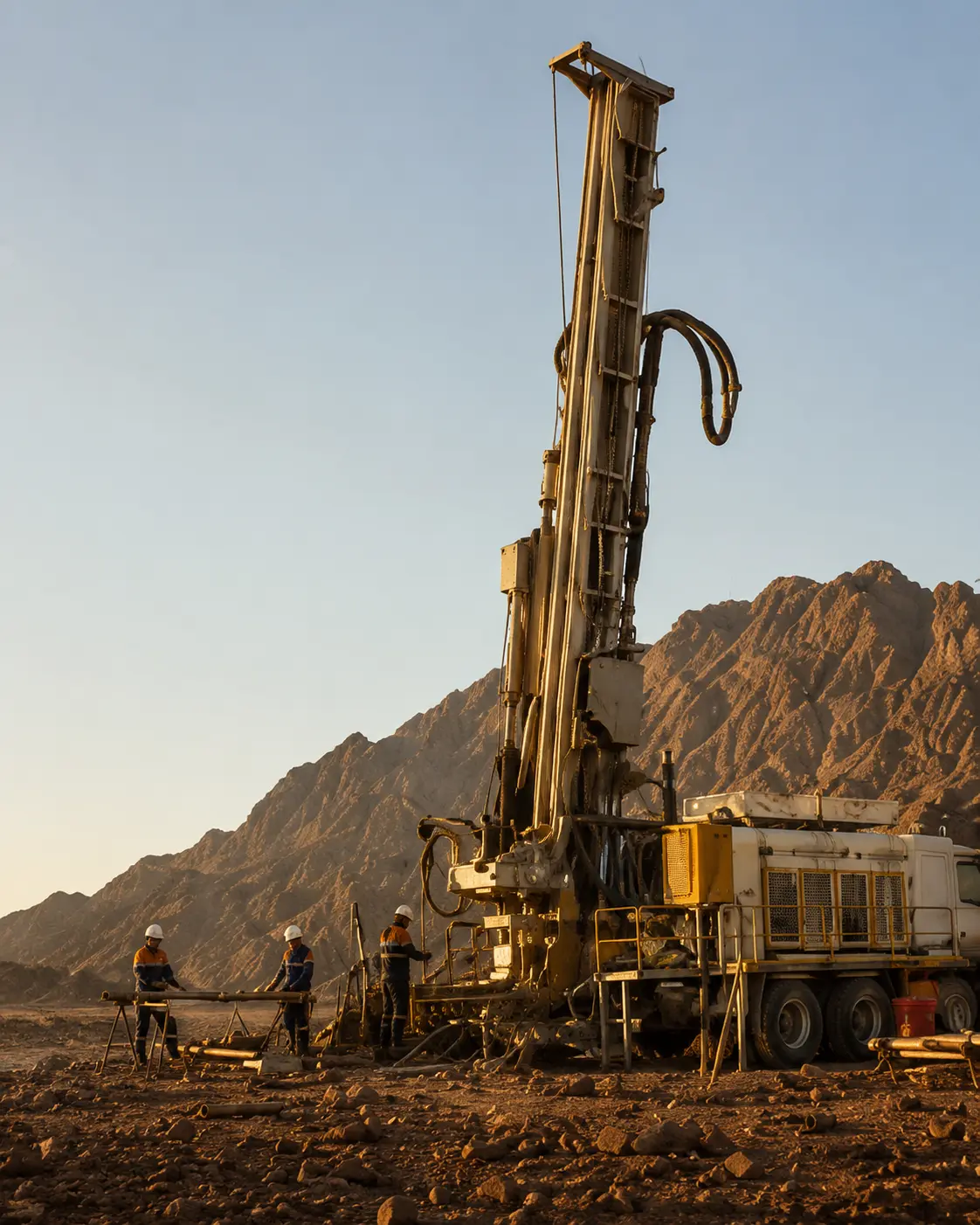
Ask whether the rigs, compressors and support vehicles belong to the contractor or are hired in. Owned equipment usually means better control of maintenance, spare parts and scheduling. Ask how many rigs of the right type are available, how old they are, and what happens if a rig breaks down in the middle of the programme.
2. Which methods and depths can they drill?
Match the contractor to the programme. Confirm the methods they offer, such as diamond core, RC, air core or grade control drilling, the depths each rig can reach, the core sizes available and the air capacity of their RC compressors. A contractor who offers both core and RC can switch methods as results come in.
3. How do they protect sample quality?
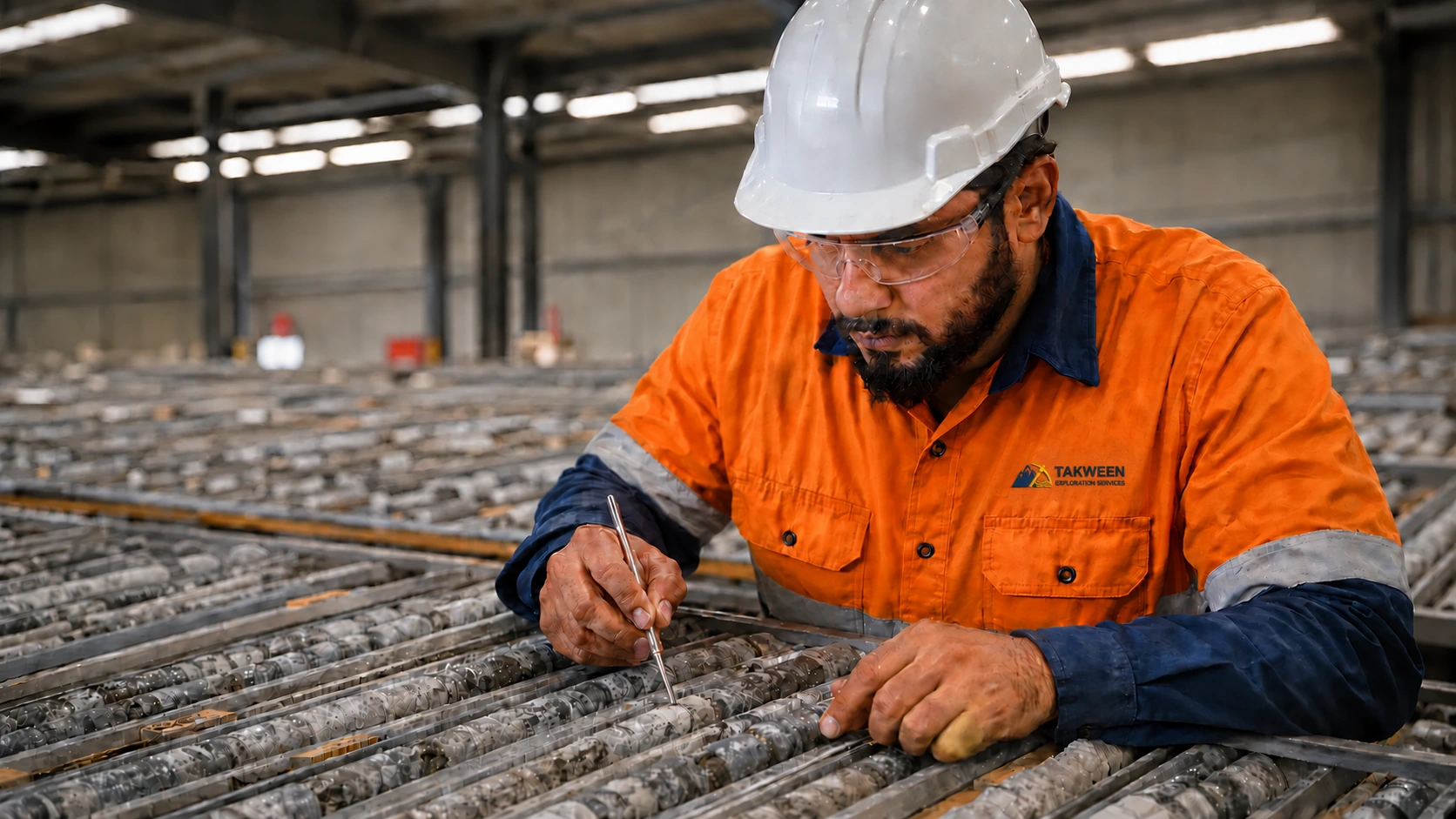
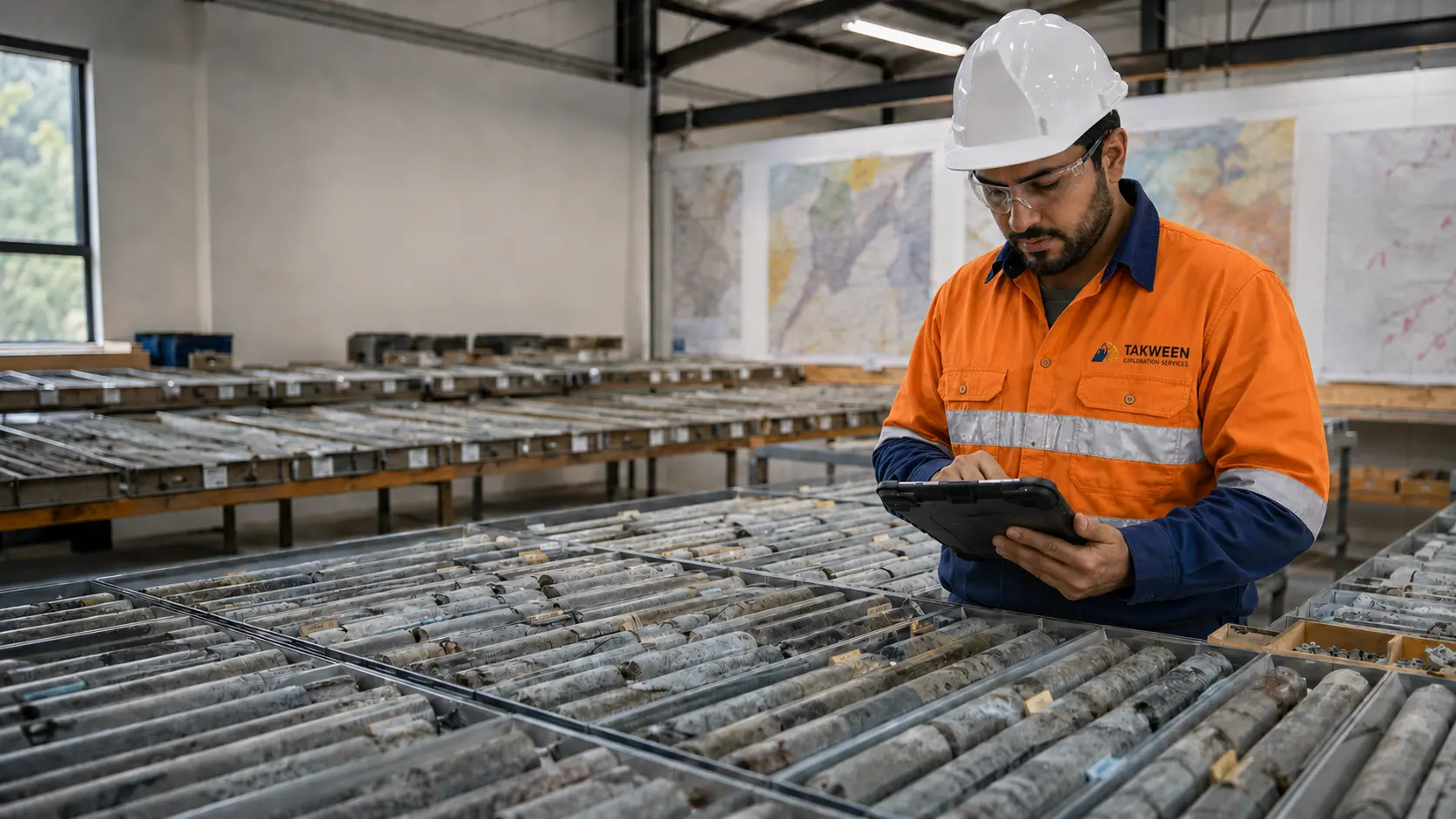
Samples are what you are paying for. Ask how the crew measures core recovery, how RC samples are split and kept clean, how core is handled, marked and photographed, and what happens when recovery drops. Ask to see an example of their core trays or sample records from a recent job.
4. Who supervises and logs at the rig?
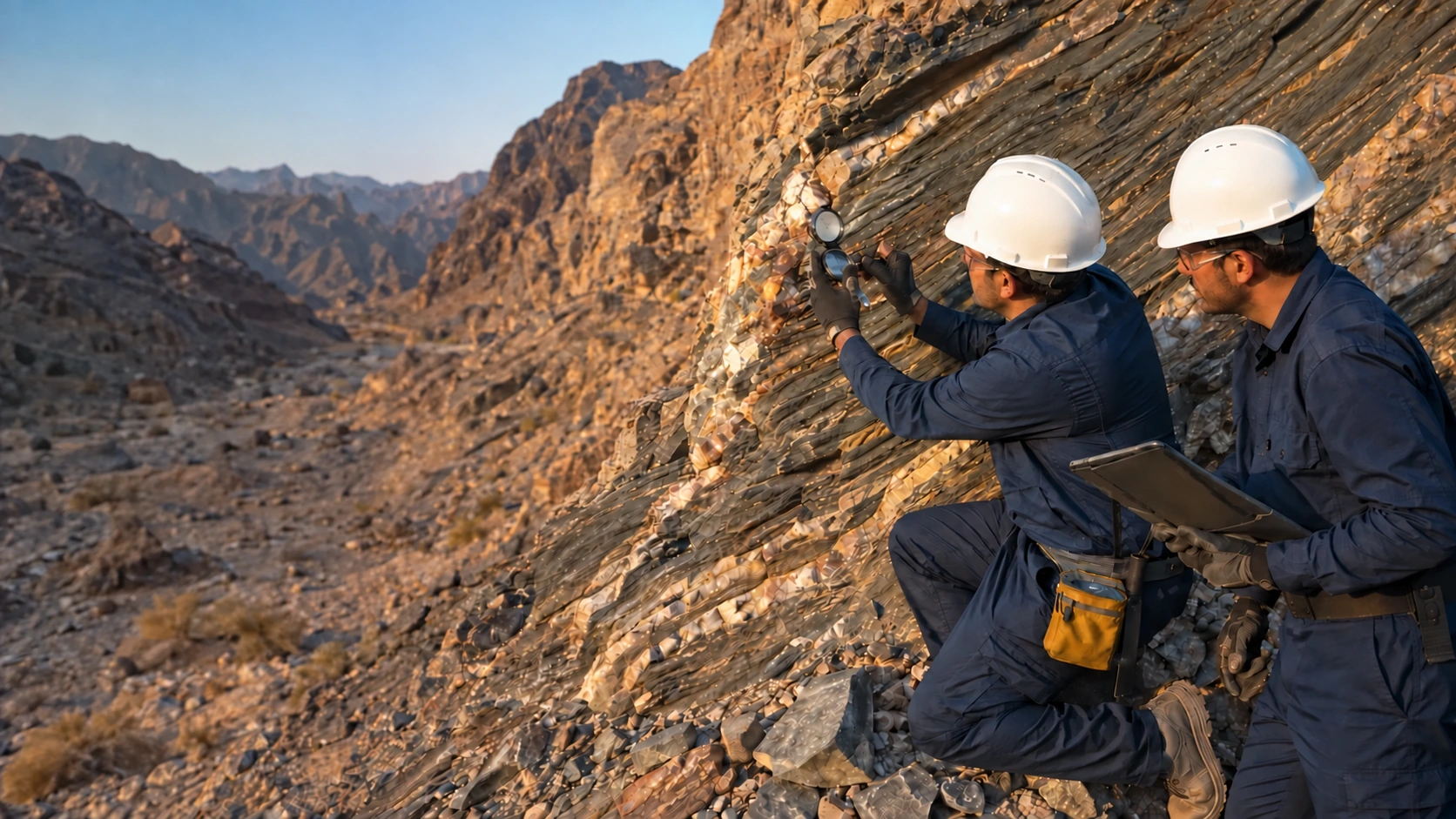
Find out who is responsible on site day to day. Experienced drilling supervisors keep holes straight and productive, and geologists logging at the rig mean a hole can be stopped, deepened or redirected while the rig is still on the pad, instead of weeks later.
5. How quickly can they mobilise, and what comes with the rig?
Remote licences need more than a rig. Ask what the contractor brings for camp, water, fuel, consumables and crew movement, how long mobilisation takes, and how they keep a site supplied. Delays in support are delays in drilling.
6. What does their safety system look like in practice?
Every contractor has an HSE manual. Ask how it works on site: risk assessment and permits before work starts, critical controls around the rig, equipment inspections, heat-stress management, journey management for long drives and emergency response in remote areas. Ask whether every person on site has the authority to stop work, and how incidents and near misses are reported and closed out.
7. How will they report progress?
Daily drilling reports should show metres drilled, recovery, hole deviation checks where relevant, downtime and its causes, and consumables used. Clear, consistent reports let you manage the programme and check invoices against the work done.
8. How are samples and data handed over?
Ask how samples travel from the rig to the laboratory, who keeps the chain of custody, and how logging, sampling and survey records reach your database. Data in a consistent format, checked as the work proceeds, saves weeks of cleaning later.
9. How is the contract priced?
Compare quotes on the same basis. Look at rates for each depth band and method, mobilisation and demobilisation, standby, consumables, core trays, water and fuel, and any charges for lost equipment. The cheapest rate per metre can become the most expensive programme once standby, lost holes and redrilling are counted.
10. What local capability do they bring?
Local knowledge of terrain, access, suppliers and working conditions makes a difference in Saudi Arabia, especially in summer and on remote licences. Ask where the contractor is based, how they source supplies and people locally, and how they plan around heat and distance.
Warning signs
- A rate per metre far below the others, with vague terms for standby and consumables
- No clear answer on who owns the rigs or how breakdowns are handled
- Sample handling and recovery that nobody can explain in detail
- Safety described only as documents, not as routines on site
- No example reports or references from similar work
Before you sign: check references and visit a site
Ask each shortlisted contractor for references from recent programmes of a similar type and depth, and call them. Ask what went well, what went wrong and how the contractor handled it. If you can, visit a site where the contractor is drilling. Ten minutes at a rig shows more than a long proposal: how tidy the pad is, how core or samples are handled, whether the crew follows its own safety rules and how the supervisor talks about the work.
Agree the details in writing before mobilisation: sample handling and recovery expectations, reporting format and frequency, standby rules, and who approves changes to the programme. Clear terms at the start prevent most disputes at the end.
A simple way to compare
Score each contractor out of five on every question, and give extra weight to sample quality, safety and equipment control. Then compare the total cost of the programme you expect, including standby and mobilisation, rather than the rate per metre alone. The scores also give your drilling tender evaluation a clear record of why one contractor was chosen.
How Takween answers these questions
Takween drills with a company-owned fleet: diamond core to 1,500 m and RC to 500 m, with air core and grade control drilling. Our geologists log at the rig, our sample management and QA/QC process keeps every sample traceable, and our HSE system is built into planning, from permits and critical controls to heat and journey management. We are based in Najran and work across the Arabian Shield.
We are happy to answer all ten questions for your programme. Contact our team to start the conversation.