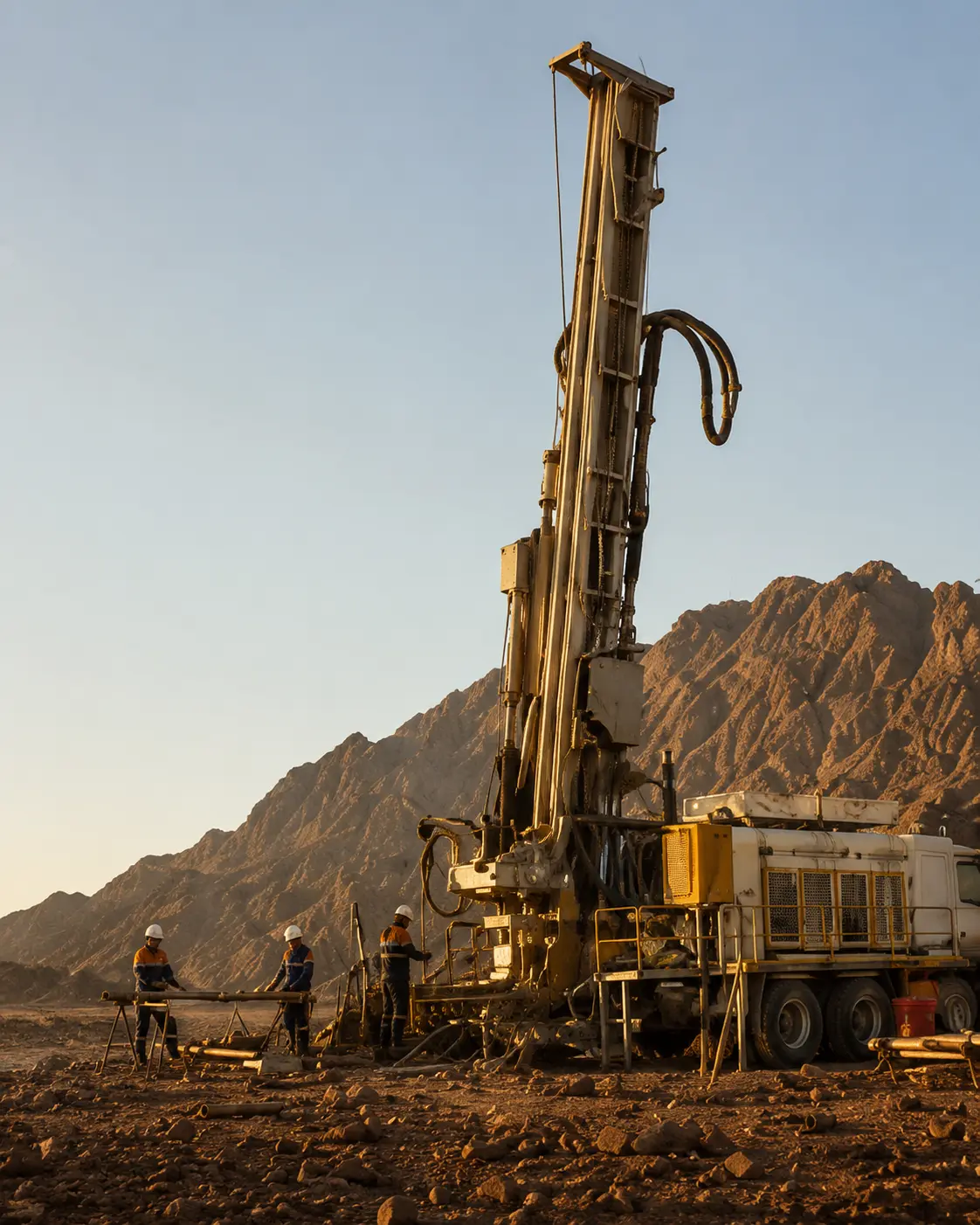
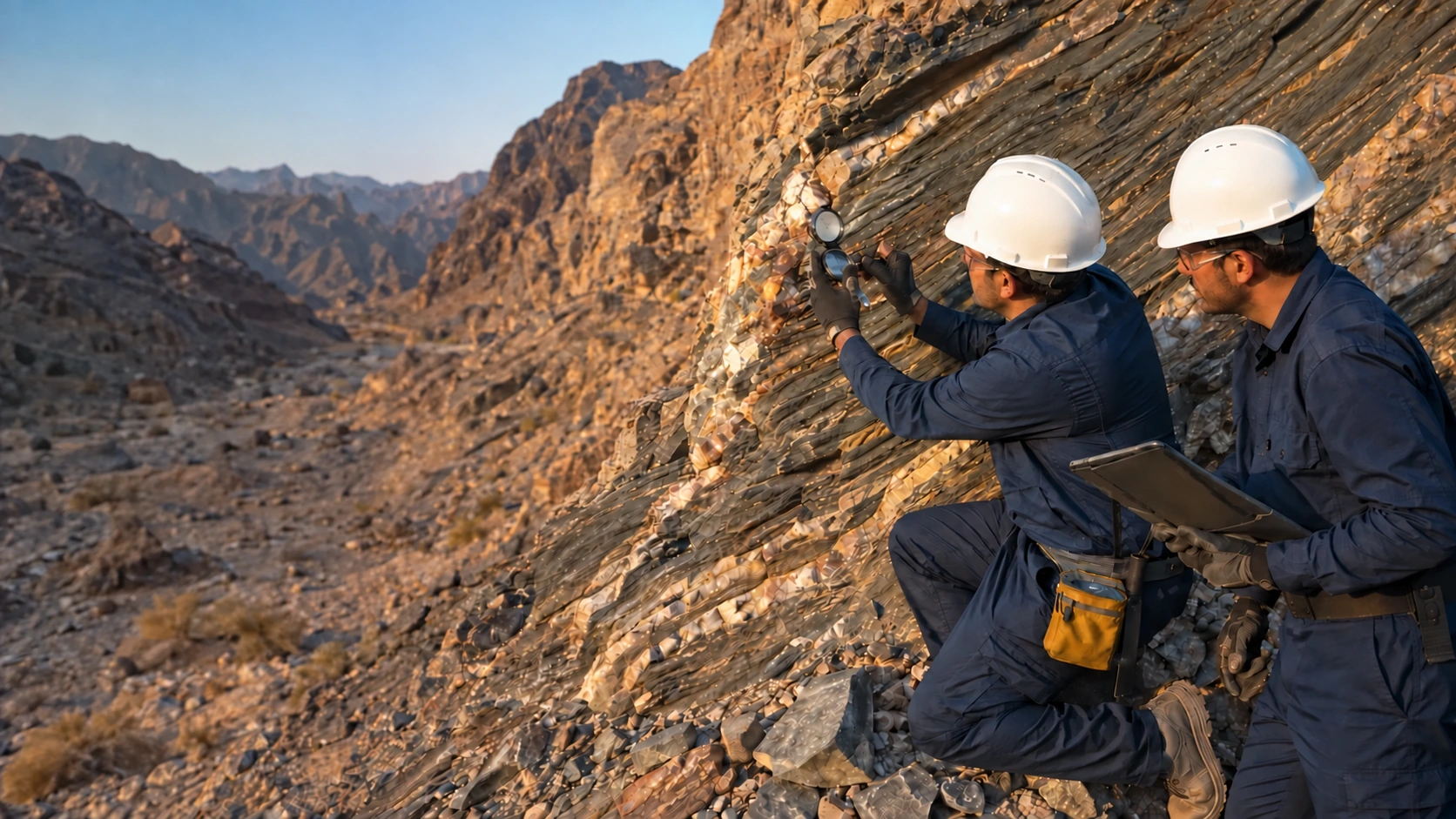
Heat stress is one of the biggest summer risks on exploration sites in Saudi Arabia. How to plan drilling and fieldwork so crews stay safe and productive.
Summer temperatures across much of Saudi Arabia regularly pass 40°C, and on an exploration site it feels hotter still. Bare rock reflects the sun, rigs and compressors add their own heat, and crews work in protective clothing, often far from the nearest clinic. Heat stress is one of the most serious summer risks for HSE in mineral exploration, and one of the most preventable.
This guide covers how to plan drilling and fieldwork so crews stay safe and the programme keeps moving.
The midday work ban
Each summer the Ministry of Human Resources and Social Development bans outdoor work in direct sunlight in the private sector between 12:00 and 15:00. In 2026 the ban ran from 15 June to 15 September, as in recent years. Plans for summer programmes should build it in from the start, and it is worth checking the ministry's announcement each year for the current dates and guidance.
The ban sets the minimum. Working in extreme heat outside those hours can still be dangerous, and a good heat plan covers the whole working day.
Why exploration sites carry extra risk
- Crews work in direct sun on open ground, with little natural shade
- Heavy physical work, such as handling rods, core trays and sample bags
- Heat from engines, compressors and hot metal surfaces
- Protective clothing that limits cooling
- Long drives and long distances to medical help
- New team members who are not yet used to the heat
Know the signs
Everyone on site should recognise heat illness early.
Heat exhaustion
Heavy sweating, tiredness, weakness, dizziness, headache, nausea and muscle cramps. Move the person to shade, cool them, give water and let them rest. Do not send them back to work the same day without the site medic's agreement.
Heat stroke
Confusion, slurred speech, collapse, seizures or loss of consciousness, often with very hot skin. Heat stroke is a medical emergency. Call for help at once, start cooling immediately and follow the site emergency plan.
Build heat into the plan
Heat illness prevention starts long before the first shift: in the schedule, the site set-up and the training.
Schedule the work
Start early and move the heaviest tasks to the coolest hours. Where it can be done safely, some drilling can run at night with proper lighting and supervision. Plan rig moves and mobilisation away from the hottest part of the day.
Acclimatise new starters
People adapt to heat over one to two weeks. New crew members, and people returning from leave, should build up their exposure gradually rather than starting on a full shift in the sun.
Water, shade and rest
Provide cool drinking water close to every work area and encourage small amounts often, rather than large amounts occasionally. Set up shade at the rig, the core yard and survey stations, and plan regular rest breaks in the shade or in air-conditioned vehicles or cabins. Increase breaks as the heat rises.
Measure the heat
Use a heat index or wet-bulb globe temperature (WBGT) reading to set work and rest cycles, and record it through the day. A simple colour-coded board at the rig tells everyone which level applies.
Look after each other
Pair people up so no one works alone in the heat, and make it normal to speak up. Every person should know they can stop work if conditions become unsafe.
Clothing and protective equipment
Protective equipment is not optional in the heat, but it can be chosen for it. Light-coloured, breathable work clothing, hard hats with neck shades, cooling towels or vests, and good sunglasses or safety glasses with UV protection all help. Make sure spare clothing is available, because clothing soaked in sweat cools the body less well.
Train for it
Include heat stress in site inductions and toolbox talks before summer starts. Crews should know the signs of heat illness, the work and rest cycles, where water and first aid are kept and what to do in an emergency. Supervisors need the confidence to slow or stop work when readings rise.
Remote-site readiness
Heat turns small problems into emergencies when the nearest hospital is hours away. Every summer programme needs:
- A tested emergency response plan, with evacuation routes and times
- Reliable communications, including satellite phones where there is no signal
- First aid supplies, cooling equipment and a trained first aider on every shift
- Journey management for every trip, with check-in times and enough water in each vehicle
- Enough water, fuel and spare parts on site that a delivery delay does not force unsafe work
Look after the equipment too
Heat affects machines as well as people. Watch engine and compressor temperatures, keep fuel stored out of direct sun, protect electronics such as survey instruments and tablets from overheating, and remember that metal surfaces can burn bare skin.
A daily heat routine
- Check the forecast and heat readings before the shift starts
- Brief the crew on the day's work and rest cycle
- Confirm water, shade and cooling are in place at every work area
- Check new starters and anyone feeling unwell during the shift
- Stop outdoor work during the midday ban hours
- Record heat readings and any symptoms reported
How Takween manages heat
At Takween, heat-stress management is part of how every programme is planned, alongside protective equipment, journey management and remote-area emergency preparedness, and every person has the authority to stop work. Read more about our HSE system, or see how it applies on our diamond core drilling and surveying programmes.
Contact our team to plan a safe summer programme on your licence.